

In every industry, you’ll find them: people who are comfortable doing things the way they’ve always...
One of Maya Angelou’s many brilliant insights includes, "You can't know where you're going until you know where you've been." When remodeling an existing home, Scan-To-BIM is how you document where the house has been, thus allowing your design team to accurately map out where the house is going to best suit your needs.
When remodeling, a first step in planning is to document the existing conditions. This exercise will produce floor plans and elevations reflecting the state of the existing house. From this, and in your architectural plans will be sheets including ‘as-built’ views and ‘demolition’ sheets. It’s from that starting point that planned changes are made by the architect and interior designer.
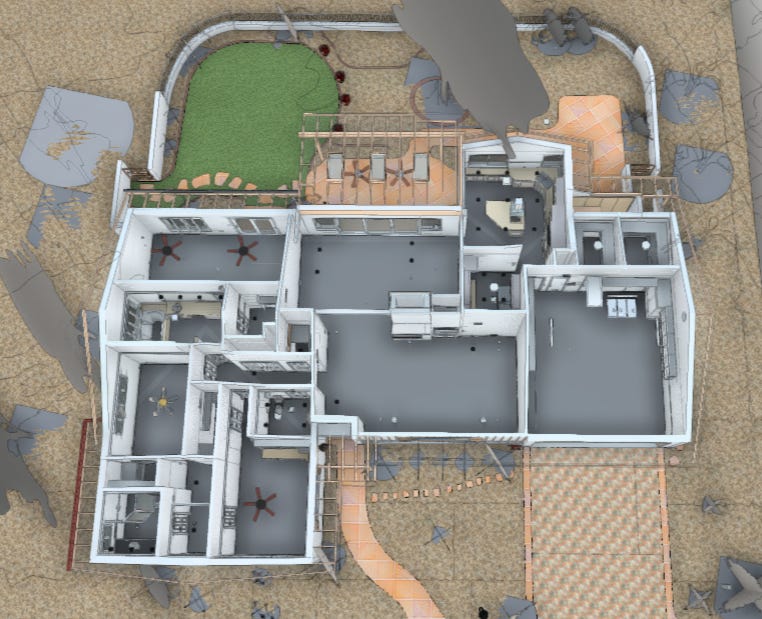
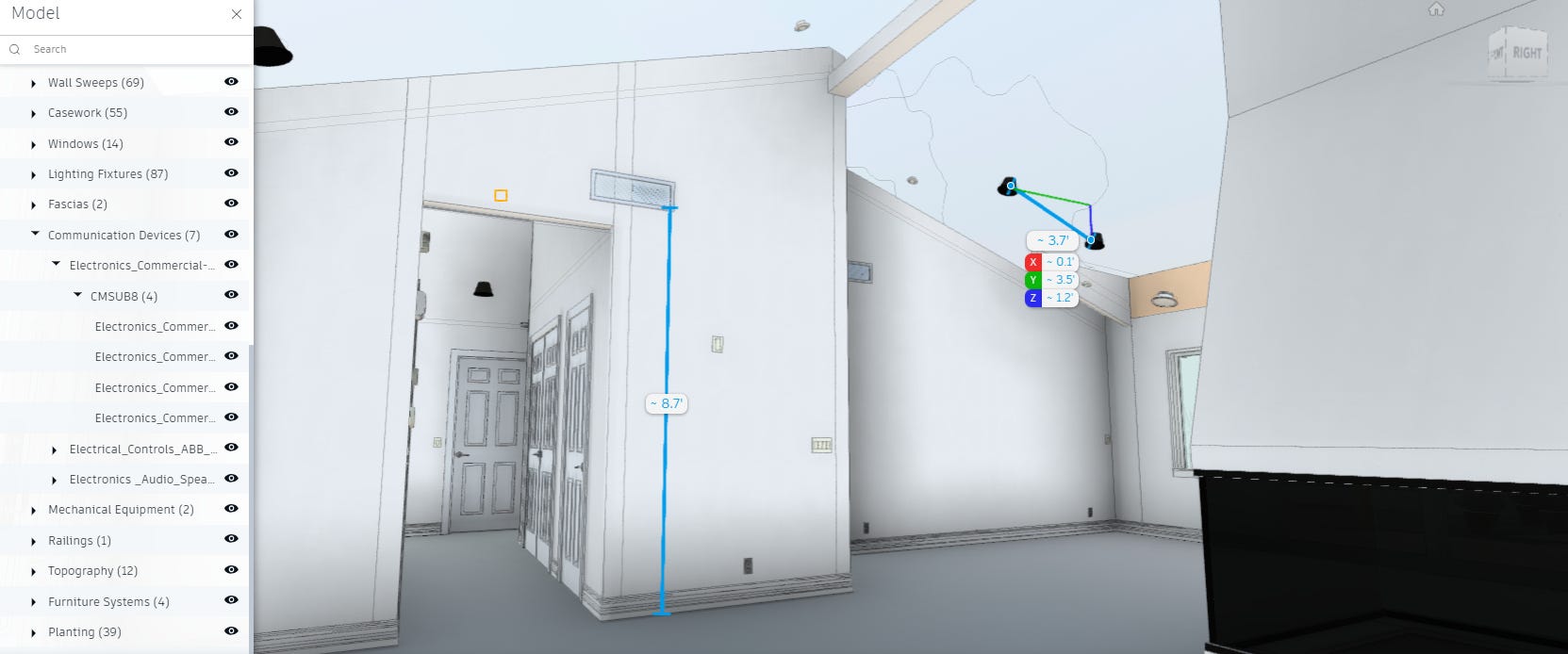
Unfortunately, there are no agreed-upon standards for documenting existing conditions, and typically, the information is gathered by having someone go out to the home and measure the existing wall lengths, heights, and window & door heights, and widths with varying degrees of accuracy. This person will often make several trips to the job site in an effort to ‘tighten up measurements’ or gather information missed in previous trips. By the third or fourth time out to the site, the drafter may begin making assumptions about certain dimensions to finish the existing work. So not only is the starting point for the architect littered with potential inaccuracies, but there is also so much detail that does not get captured at all: existing lights, light switches, outlets, air registers, fire sprinklers, and more. As determinations are made about where new systems are needed, how can we accurately inventory which existing elements stay and which ones will be deleted or replaced?
So, even at this early stage in planning, before any architectural work is done, we already have planning problems that will drive inefficiencies.
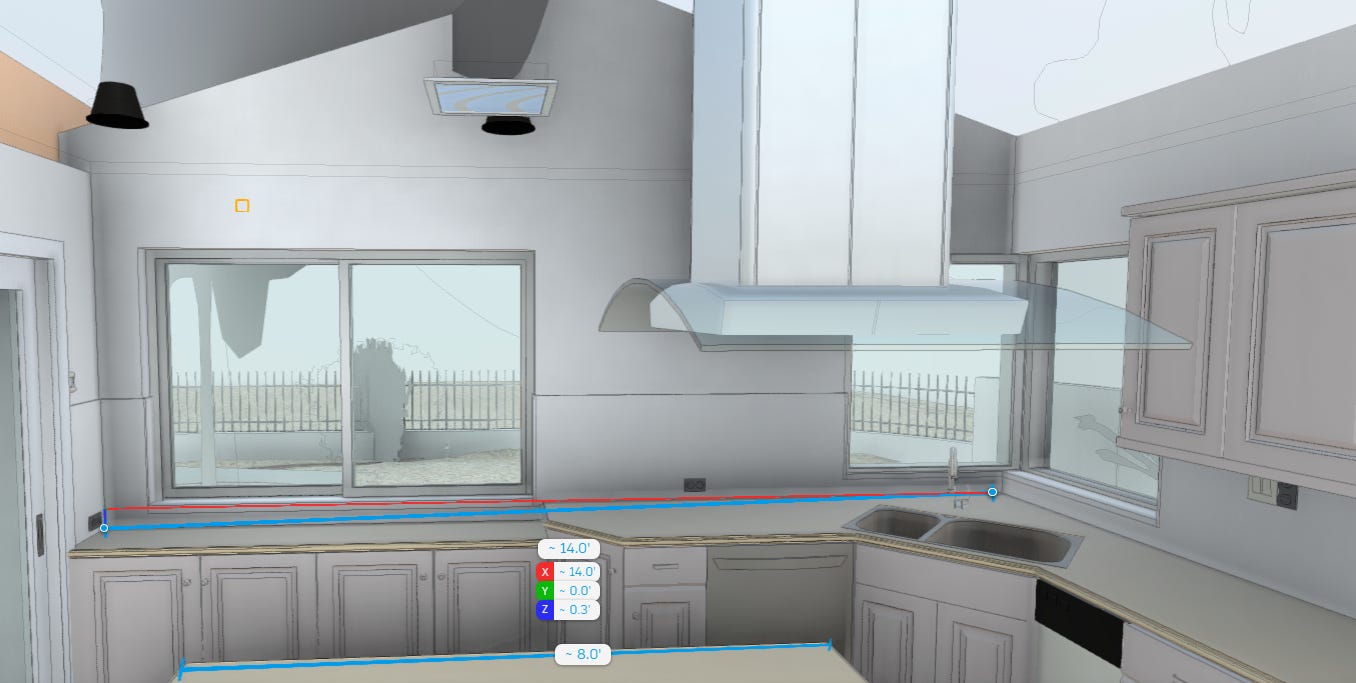
Scan-to-BIM resolves this. Not only can you get exacting details within up to 2 mm of accuracy (no measurements required and no crappy handwriting to decipher), but you also get every detail mentioned above and more. Now, we know how many can lights, switches, and receptacles are in the home and their exact locations. Now we know within 1/2 inch of accuracy where the existing walls and their thicknesses, ceilings, doors, and windows are. Now we know where the current systems and risers are, so we understand how and where water, power and gas come into the home today.
Why is this so important?
For starters, the interior designer typically uses the architect’s work as a baseline; including their existing conditions measurements, and utilizes it for their planning. This means any errors in measurements now carry over to the finishes design. And, no record of the existing systems that run off of electricity or use water now makes it seem as though every system in the home is brand new, whether that is true or not.
All of this leads to three very real problems:
Budgeting becomes unruly and inaccurate when the existing systems are not distinguished from the new systems. If we do not know that the walls are made of block instead of lumber, or we do not know exactly how many of the existing electrical circuits are staying, there is no easy way to accurately cost those elements of the job. By capturing these details with accuracy in the Scan-to-BIM process, the team can accurately plan and scope the expertise, materials, and labor required to properly do the job.
Fit and Finish becomes excruciating when cabinets, windows, doors, tile orders, and more start showing up at the job site but don’t fit as planned. Beams are now running into sprinkler heads and air conditioning registers, cabinets are not fitting correctly, walls are larger than thought, and now there are tile and finish shortages. The details are falling apart and cannot be adjusted in time or cost effective ways any longer. This is one of parts of the project that tests homeowners’ patience, and little do they know that these problems stemmed from errors in planning, not manufacturing or installation.
Version Control is a problem that the industry unanimously agrees on. In the example above, perhaps the interior designer went to the field to verify measurements and caught the mistakes in the architectural plan. She now adjusts her plans to the correct dimensions, and now there are two versions of the plans. The electrician, by way of example, is working off of the electrical plan and power plan provided by the architect, so the JBoxes for your sconces are in the wrong locations. No one catches this mistake until the fixtures are getting installed and don’t look placed properly. Only now, the whole wall is tiled, the ceiling millwork has been installed, and this becomes one of many unforced errors.
The Net-Net:
Another great quote, from Benjamin Franklin professes ‘an ounce of prevention is worth a pound of cure’. I cannot think of a business more in need of searching for these exliers than custom home remodeling. Scan-to-BIM is a great example of some low hanging fruit offering your ounce of prevention if your willing to squeeze it.
