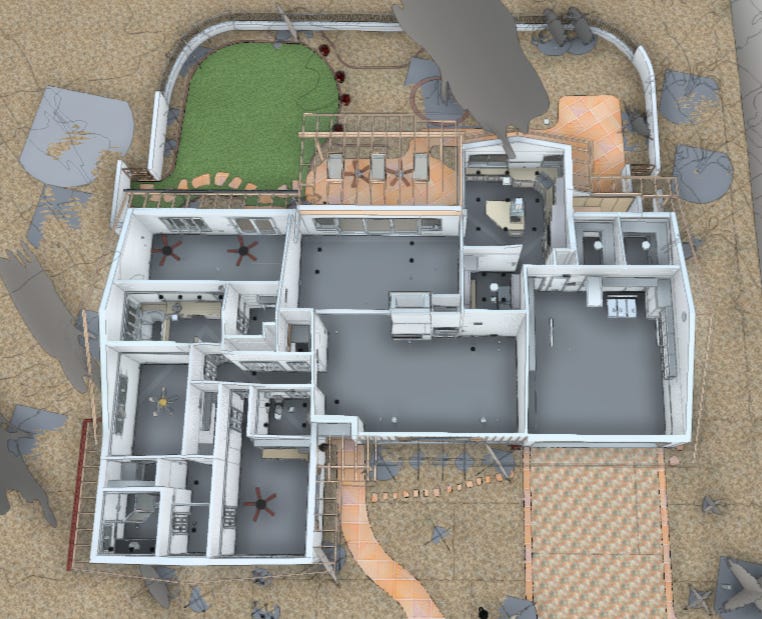
BIM (short for building information modeling) has become a buzzword, often thrown around with...
When we think about building a home, we often focus on the excitement of the final product—imagining the finished space where memories will be made. However, there's another layer of consideration that can vastly enhance the longevity and functionality of your home: scanning during construction. By capturing detailed images at critical points in the construction process, you can create the equivelent of an “MRI” of your home, providing invaluable information for future renovations, repairs, or expansions. Here’s why you should consider incorporating scans into your construction plan and the key stages where they matter most.
The Foundation Scan: Rebar Memorialization
The first key point for scanning occurs before the foundation is poured, specifically when the rebar is in place. At this stage, scanning allows you to capture an exact record of where the rebar is located within the foundation. This scan serves as a permanent memorialization, offering a detailed blueprint that can be referred to in the future.
Why is this important? Rebar placement is crucial for the structural integrity of your home. If issues arise down the line—whether due to shifting soil, seismic activity, or simply wear and tear—having a precise record of the rebar's location can significantly ease the process of troubleshooting and corrective action. This scan not only provides peace of mind but also serves as a preventive measure against potential structural issues.
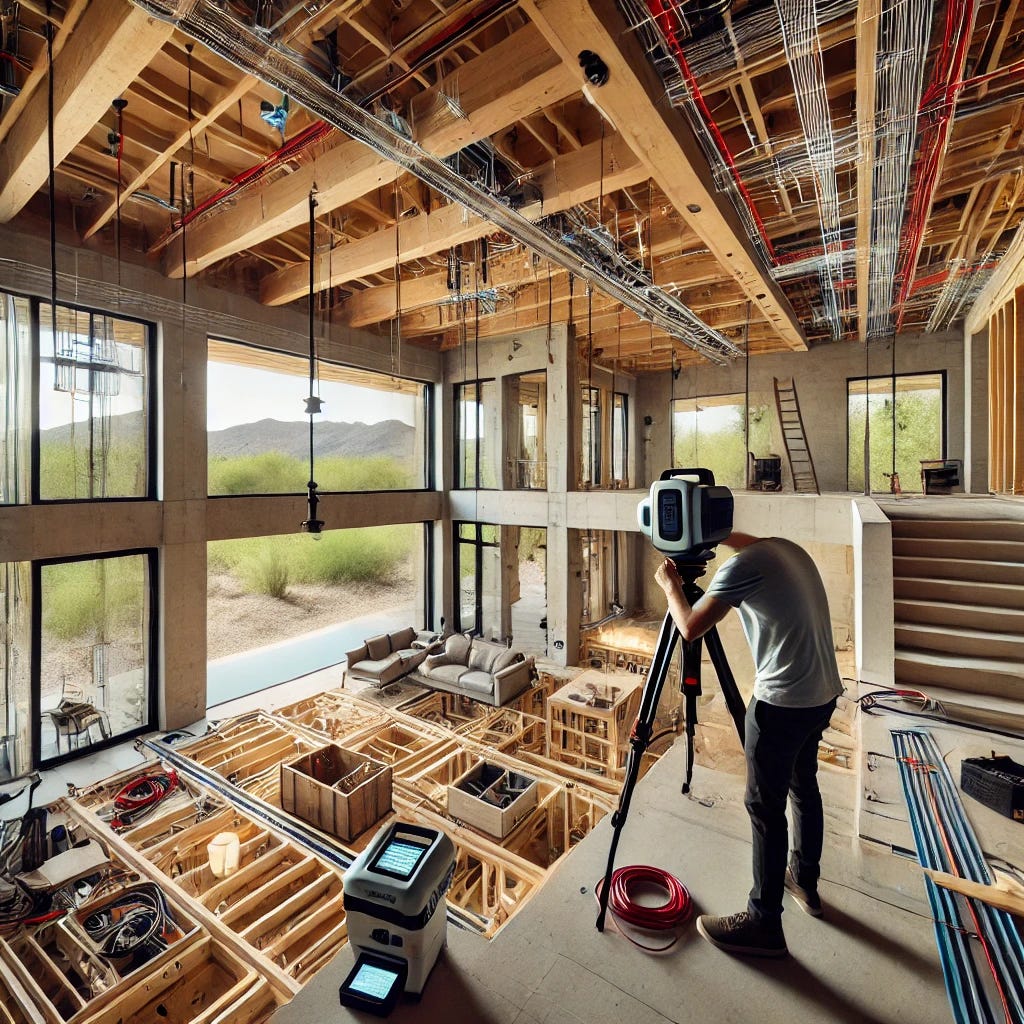
The Pre-Drywall Scan: Capturing the Hidden Systems
The second critical scan should be conducted before the drywall goes up. This stage of the construction process reveals all the hidden elements that keep your home running smoothly—framing, electrical wiring, plumbing, mechanical systems, sprinklers, and low-voltage systems. Once the drywall is installed, these systems become invisible, making future modifications or repairs challenging without detailed documentation.
A pre-drywall scan creates a comprehensive record of these systems' exact locations, offering a valuable reference for any future work. For example, if you need to troubleshoot an electrical issue, knowing precisely where the wiring is routed can save time, money, and the hassle of tearing down walls. Similarly, if you plan to remodel or expand your home, this scan can guide contractors in navigating existing systems, ensuring minimal disruption and a smoother construction process.
The Final Scan: Documenting the Finished Product and Environmental Conditions
The third and final scan should take place once all the finish materials are installed, right before the project is complete. This scan serves multiple purposes. First, it documents the condition of the home at the time of completion, providing a baseline for future maintenance or repairs. This can be especially useful for warranty claims or insurance purposes, offering clear evidence of the home's condition at a specific point in time.
Additionally, this scan can capture any environmental conditions that may affect the property, such as settling or minor shifts that occur as the home adjusts to its environment. Having this information on record can help in identifying and addressing potential issues early on, before they develop into more significant problems.
The Long-Term Value: Your Home’s MRI
By taking scans at these three critical points, you create what amounts to an MRI scan of your entire home. This detailed documentation offers unparalleled insight into the inner workings of your property, enabling you to make informed decisions in the future. Whether you need to address a system failure, expand your home’s footprint, or improve existing systems, these scans provide a roadmap that makes these changes minimally invasive procedures.
In the long run, investing in construction scans is about more than just creating a record—it's about future-proofing your home. These scans offer long-term value by reducing the risk and scope of costly repairs, simplifying future renovations, and providing peace of mind that your home’s infrastructure is well-documented and easily accessible when needed.
Conclusion
Incorporating scanning into your construction process is an investment in the longevity and adaptability of your home. By capturing detailed images at these critical stages, you ensure that you have the information needed to maintain, modify, and improve your home with minimal disruption. Think of it as giving your home an MRI—a powerful tool that helps you see beneath the surface, offering clarity and confidence in every decision you make for years to come.